The trust layer
for creative work
A licence decides whether the work opens. PRVNZ issues that licence for the people who make music, film, visuals and writing — and the tools they all run on — checks it on the machine at the moment of opening, and settles the deal on the ledger financial institutions already trust.
Checked on the machine where the work happens, with the wifi off. No dongle. Nothing left running once you close it.
One licence,
and everything
it takes to hold it.
The licence is the product. It decides whether the work opens, on the machine, in the moment it is asked for. Everything else we issue exists to make that answer worth trusting.
Licence
Who may use it, where, and until when?
A licence belongs to a person, not a machine. Buy on one computer and it is there on the next. Sell it and it stops working for you and starts working for them. Lose the laptop and you release it yourself, without needing the laptop to agree.
- Belongs to
- The person
- Lifetime
- Revocable
- Checked
- Offline, at the moment of opening
Passport
What is this, and is it genuine?
A passport is what a licence is checked against. It travels with the thing itself and says who made it, what it is, and that nothing has been changed since. It belongs to the asset, it stays true forever, and it can be read on a machine that has never been online.
- Belongs to
- The asset
- Lifetime
- Permanent
- Read
- Offline
Catalogue
What do I hold, and what is it worth?
A catalogue is every licence you hold in one place — masters and stems, plugins and rigs, the guitar in the case and the licence you bought last year. Each line is a real position you can value, split, borrow against or sell, not a row in somebody else’s database.
- Belongs to
- The holder
- Lifetime
- As long as you hold
- Settled
- On Canton
Fingerprint
Whose recording is this, and may it train AI?
A fingerprint is taken from the sound itself, so a recording is recognised in any file: cut, re-encoded or turned down. The owner registers it once, with their word on AI training, and anyone can look it up: a listener, a label, or a model developer checking before they train.
- Belongs to
- The recording
- Found by
- The sound itself
- Checked
- By anyone
- A master
- A stem pack
- A film cut
- A photograph
- A manuscript
- A plugin
- A font
- A 3D asset
- A training set
- A guitar
- A back catalogue
- Anything you sell
It happens
on your machine.
Everyone else keeps the answer in a database and asks for it when you need it. We put the answer on the laptop, so the question gets settled in the one place that matters — the moment the work opens.
Nothing to carry
You set a machine up once, in an app you open and quit. There is no dongle to lose, nothing installed that keeps running, and no driver or system extension anywhere.
Nothing to call
Opening a plugin does not ask a server for permission. There is no service to be slow, no outage to sit through, and no queue at ten on a Monday.
Two days of slack
A basement studio, a flight, a hotel with bad wifi. If the connection goes, everything keeps working for forty-eight hours — long enough to cover a weekend.
No licence,
nothing opens.
This is the part that makes it real rather than a receipt. The software asks before it loads and acts on the answer. Without a licence the plugin does not run, the rig does not load, and the sealed files stay shut — because the key that opens them only exists while the licence does.
Not a warning banner, not a nag screen, not a watermark you can crop off. A decision made before anything is handed over, on hardware we do not control, with no server in the loop. Everyone else records the right. This is the moment it is exercised — and it is the only reason a position on a ledger means anything to the person holding it.
Two levels,
and we say
which is which.
Everything gets a licence. Not everything can be stopped at the door, and pretending otherwise is how this industry lost the room.
Software
EnforcedPlugins, instruments, presets, rig packs — anything that runs, and anything opened by an application with PRVNZ inside it. The software asks before it loads and gets an answer on the spot. This is the part that works with the wifi off, and the part nobody else attempts.
Works
Signed & settledStems and masters, film cuts, photographs, visuals, writing, training sets — any art in any format. They carry a passport that proves what they are forever, and terms that hold when they change hands. What they do not get is a gate at the moment of opening, because the software opening them is not ours. We would rather tell you that than sell you a promise a third-party editor will break.
Already
in use.
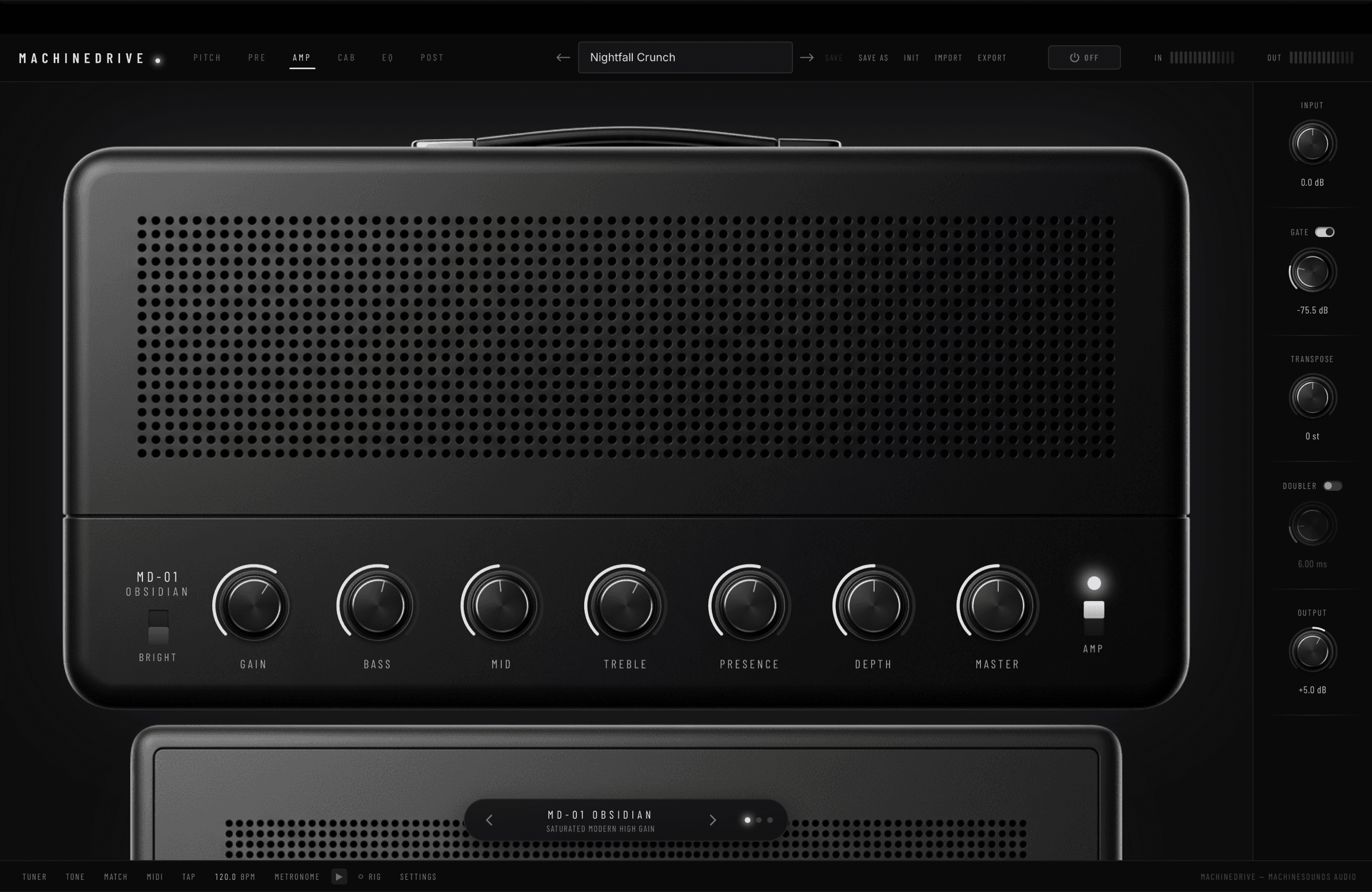
A guitar amp and rig platform from MachineSounds. Every rig pack that was paid for carries a licence, and every amp, cabinet and pack it opens carries the passport that licence is checked against.
Both are read on the machine, in the moment the sound loads. Built on PRVNZ from the first version rather than fitted with it afterwards.
Your licences, in the app
Everything you own sits in one list inside the settings — what it is, which machines are using it, when it was last seen. No separate manager to install, no website to sign into before a session.
Move a machine yourself
Free a slot from the list and take it somewhere else. You do not need the old laptop to agree, and you do not need to open a support ticket to get your own work back.
Sell it on
A rig pack you bought can be passed to someone else on the terms it was sold under. It stops working for you and starts working for them, and the maker is paid their share on the way through.
Ownership
needs somewhere
neutral to sit.
A record only settles an argument if neither side can quietly change it. PRVNZ settles on Canton — the ledger major financial institutions already trust with real assets, built for agreements that have to hold up years later in front of people who were not in the room.
There is no PRVNZ coin and nothing to trade. The ledger is where a sale is recorded and a share is paid. It is never what your session waits on.
Your business stays yours
A deal is shown to the people in it and to nobody else. Your catalogue, your terms and your numbers are not a public feed for anyone with a browser to read.
Nothing moves without authority
Who may resell it, who has to approve and who gets what share is written into the deal itself. A transfer carries the authority that deal demands or it does not happen — the licence moves and the maker is paid together, or neither does.
It does not stay in one place
Through the Tenzro network, what is settled here reaches the other major networks a catalogue might need to live on. Licensed in one place, recognised in others.
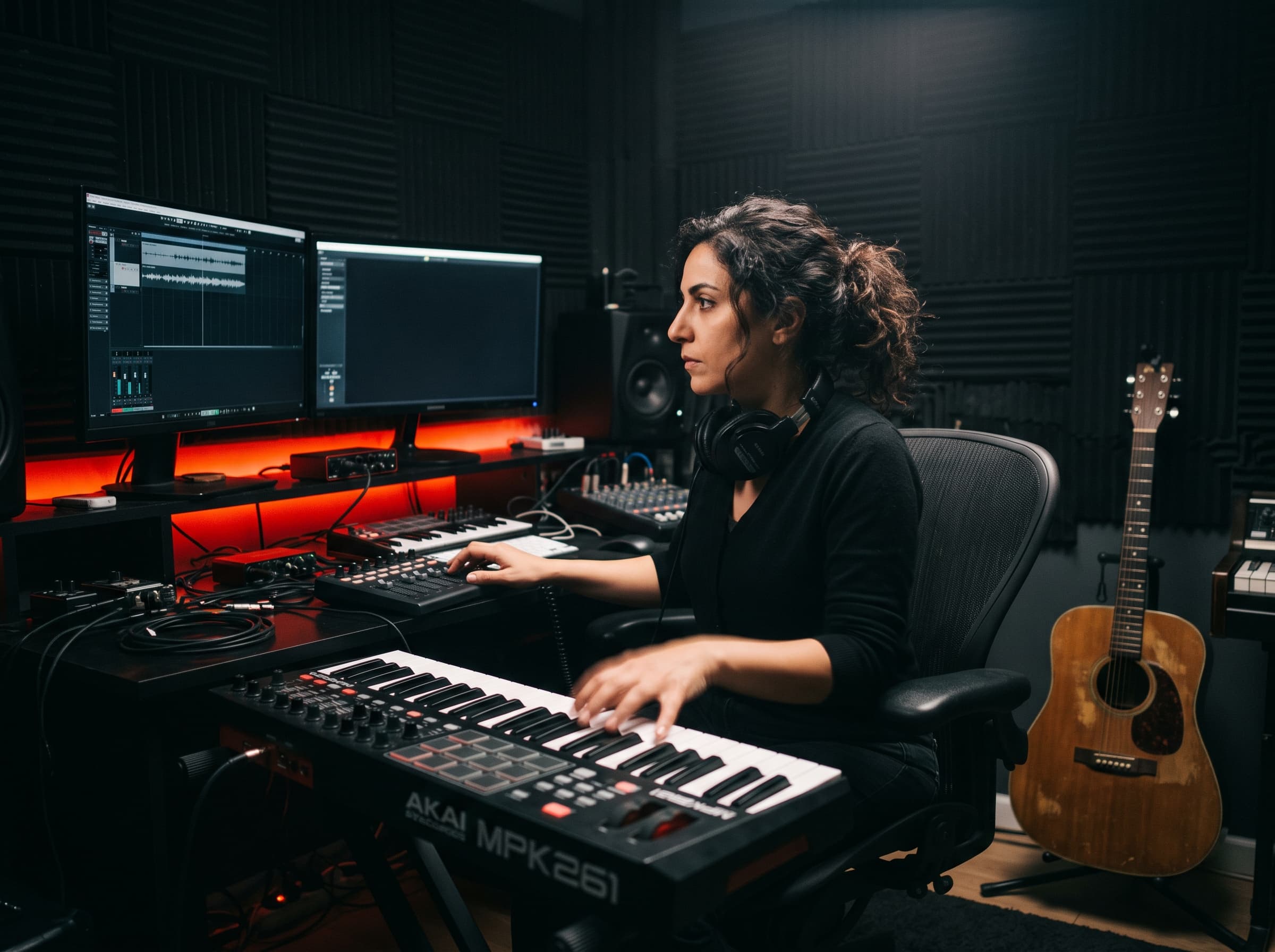
A creative
business is
an asset class.
Once what you own is a real position rather than a row in someone else’s database, it can be valued, split, financed and sold — the ordinary things every other industry does with property, and creative people have never been able to do with theirs.
A business you can show
A creator’s holdings stop being scattered receipts and become one catalogue with a value — masters, stems, plugin licences, the gear in the room. Something a bank, a partner or a buyer can actually look at.
Money against the work
A catalogue that proves itself can be borrowed against, advanced on, or insured without signing the rights away. The work becomes collateral instead of the only thing you have left to sell.
Shares in what you make
A share of an instrument, a record or a rig pack can be issued, held and traded on the terms its maker set. Session players, engineers and early backers can hold a real position rather than a thank-you.
A resale market that pays back
When a licence or a master changes hands, the split runs at the moment of the sale. Secondhand stops being a leak in the business and starts being part of it.
Training data that can prove itself
A dataset with a passport can show where every piece came from, who agreed to it and on what terms. Right now the AI industry cannot answer that question, and the people whose work is in the pile cannot either.
Models with a paper trail
If the data going in is attested, what comes out can be too — a model that carries the record of what it learned from, and licences that pay the people it learned from. That is a market nobody can open without provenance first.
Not a picture of the thing. The thing.
Three ways in,
one answer.
The same licence and the same check, whether a person is holding it, a plugin is reading it, or a company is issuing ten thousand of them.
The app
A small desktop application you open and quit. It holds your account, sets up a machine, and shows everything you own in one list. Nothing installs, nothing keeps running, and there is no dongle in the box.
The SDK
A library you build into your own software. It checks a licence on the machine, reads the passport behind it, answers in the time it takes to read a file, and never phones home mid-session. Native, and small enough to sit inside a plugin.
The service
A hosted side for issuing, revoking and settling at volume — the part a label, a store or a manufacturer runs. Your customers never see it, and neither does your session.
- Licence Enforcement
- Offline entitlement inside your own software
- Settlement & Splits
- Sales, resales and shares settled on Canton
- Catalogue Issuance
- Licences across a back catalogue, in bulk
- Custody & Recovery
- Getting a person back into their own holdings
- Product Passport
- Provenance for a physical product or an instrument
- Dataset Attestation
- Provable consent and origin for training data
Labels & management
A catalogue that can prove what it is, and terms that survive being handed to a distributor, a sync agent, or whoever is holding it in ten years.
Artists & producers
Your stems and sessions carry your name in a way nobody can argue with later. What you licensed out stays licensed on the terms you set.
Instrument & software makers
Licensing your customers do not resent. No dongle, no login before a session, and a resale market you earn from instead of losing to.
AI teams & data buyers
Training data you can stand behind, with consent and origin attached to every piece. The question everyone is about to be asked, answerable before you are asked it.
Trust is the part
the industry
stopped shipping.
We are building it back in the two places it went missing — proving what a thing is, and holding what was agreed about it. If you make creative work, or the tools for it, we want to hear what you need from that.
Read the documentationOpening for partners